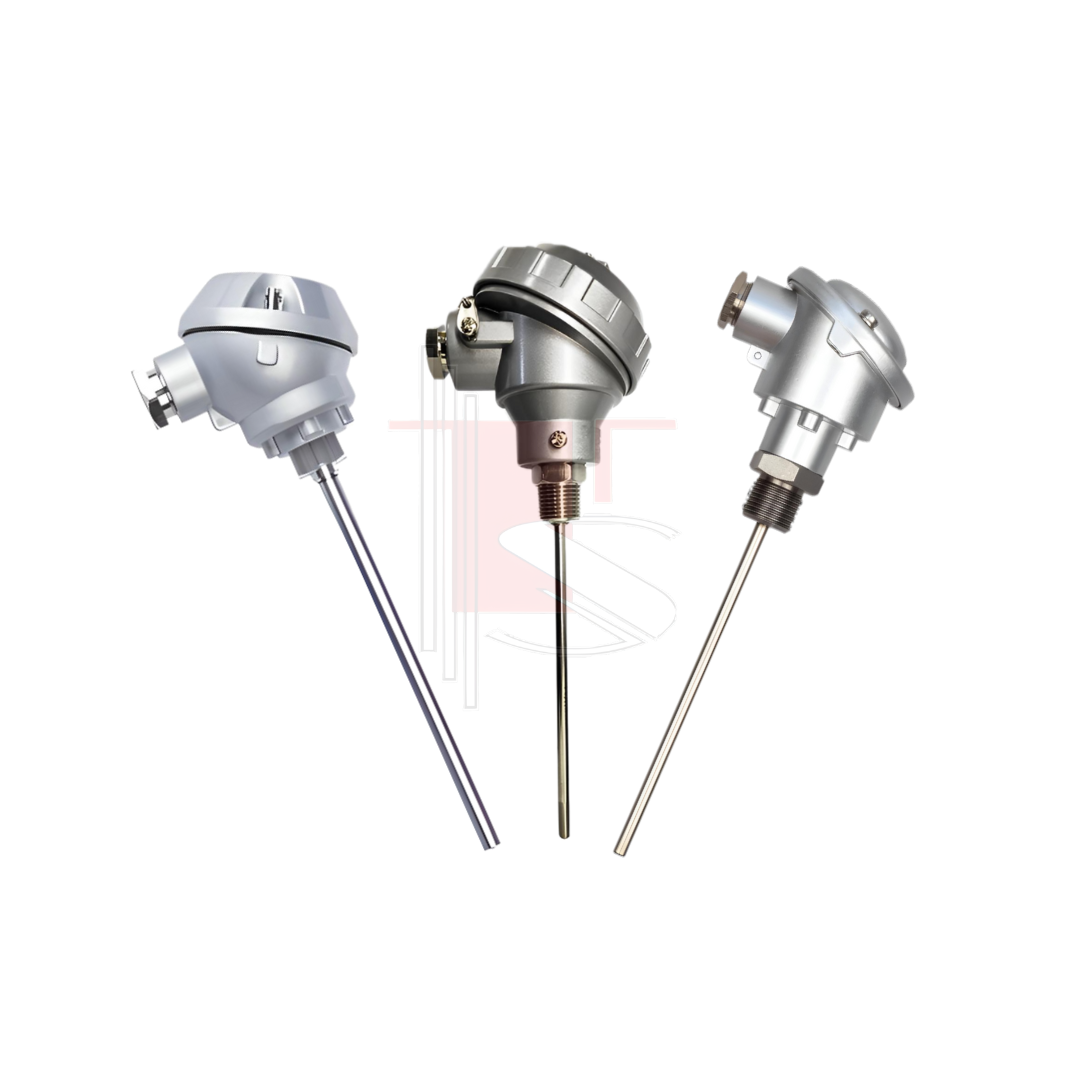
Recommended for vacuum, inert, or reducing atmospheres (exposed or unexposed).
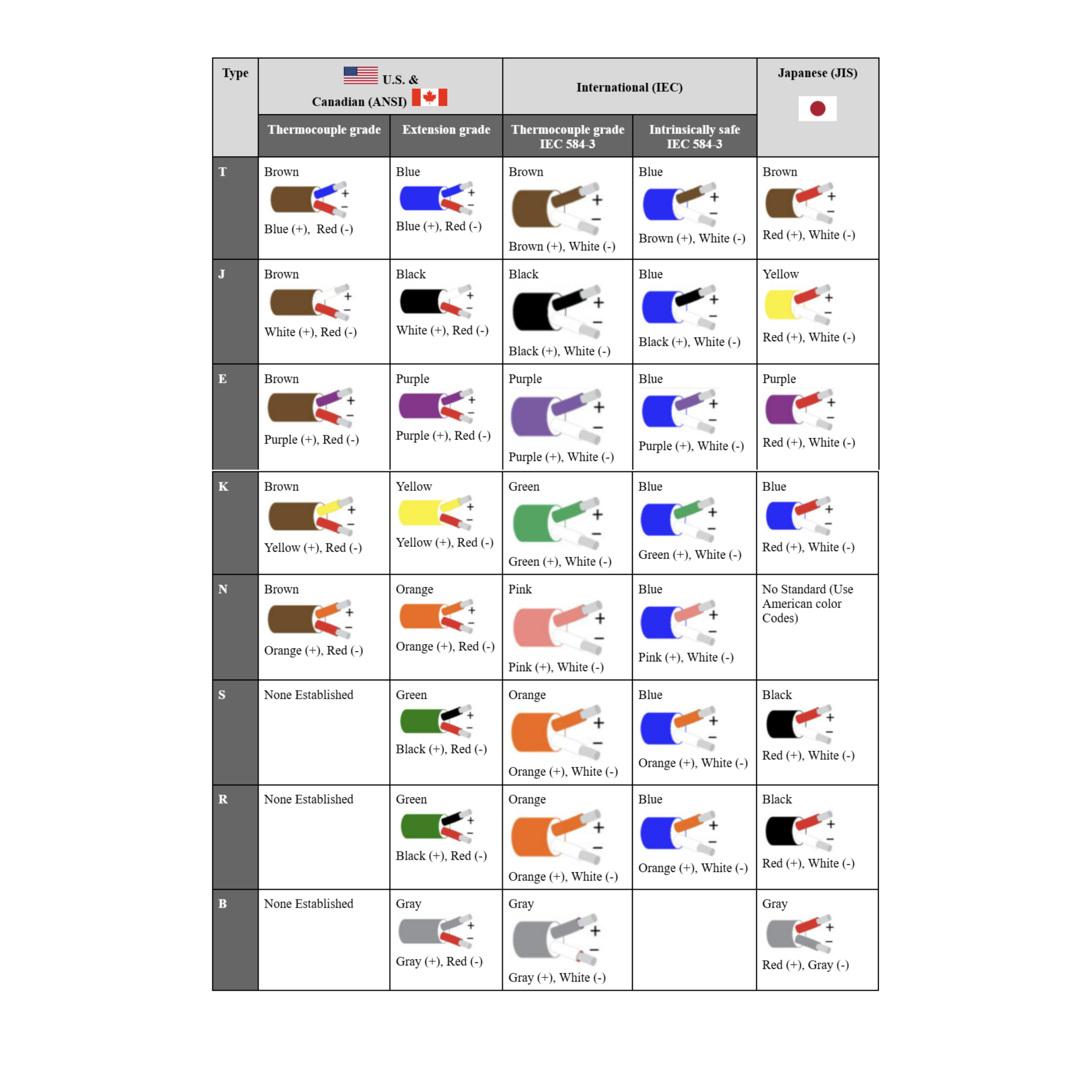
THERMOCOUPLE CABLE COLOR CODES
WORKING PRINCIPLES
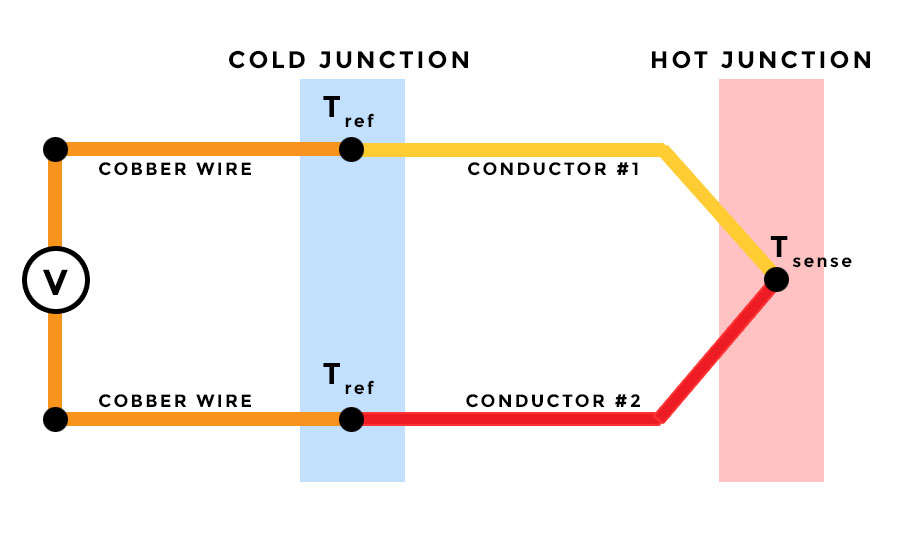
A thermocouple is a temperature sensor made of two wires of dissimilar metals joined at one end, working based on the Seebeck effect.
The Seebeck effect describes the generation of a differential voltage due to variations in electrical conductivity between two materials.
When the junction of the two metals is exposed to a temperature difference, an electromotive force (EMF) is generated to measure the temperature.
How it Works:
Hot Junction: Exposed to the target temperature (e.g., a furnace or industrial process).
Cold Junction: Connected to a stable reference point, usually at ambient or known temperature (e.g., an instrument terminal).
As an electric current flows through the junction of the two metals, differences in conductivity and resistance result in a measurable voltage.
This voltage is proportional to the temperature difference (ΔT) between the hot and cold junctions.
Both metals heat up at different rates, producing two distinct voltages, which the thermocouple system interprets to calculate temperature.
THERMOCOUPLE JUNCTION TYPES
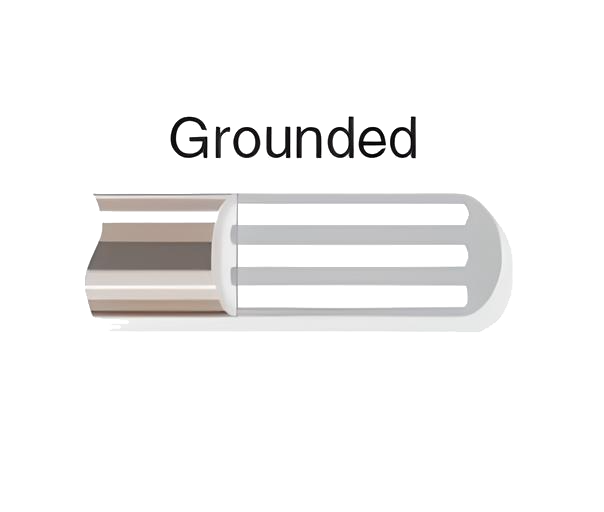
Grounded:
• The junction is welded directly to the sheath for fast response.
• Best for applications like high-pressure steam or corrosive fluids. • Advantages: Rapid response to temperature changes. • Trade-off: Susceptible to electrical noise and ground loops, which can interfere with accurate readings.
Ungrounded:
• The junction is electrically isolated using insulation, and not touching the edges. • Advantages: Immune to ground loops, offering stable and accurate readings. • Trade-off: Slower response time as heat must transfer through the insulation.
• Ideal for sensitive applications like chemical reactors.
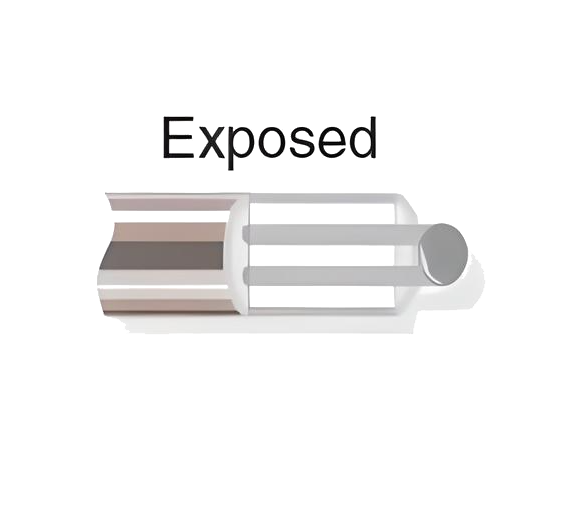
Exposed:
• The junction is bare and unprotected by a sheath. • Advantages: Fastest response time (as low as ~10 ms). • Trade-off: Limited to clean, non-corrosive environments (e.g., air ducts) and prone to wear and tear.
• Not suitable for harsh or corrosive environments.
BENEFITS OF THERMOCOUPLE
Wide Temperature Range: Thermocouples can measure an extensive range of temperatures, from cryogenic levels to extremely high temperatures, making them suitable for diverse industrial and scientific applications.
Fast Response Time: Provides near-instantaneous temperature readings, enabling precise process control and efficiency in dynamic environments.
Durable and Robust: Built to withstand harsh environments, including high vibration, extreme pressure, and corrosive atmospheres. Ideal for demanding industrial conditions.
Cost-Effective Solutions: Offers an economical option for temperature measurement, with a range of materials and configurations to meet budgetary requirements.
Versatile Applications: Available in multiple types (e.g., J, K, T, R, S) to suit specific needs across industries such as manufacturing, energy, and food processing.
Self-Powered: Operates without an external power source, making it ideal for remote or hard-to-reach locations.
Compact and Flexible: Small form factor and customizable designs allow integration into a wide variety of systems, even in tight or complex spaces.
Highly Accurate and Reliable: Delivers consistent and precise temperature readings over long periods, ensuring dependable performance.
Standardized and Easy to Use: Globally recognized color codes and configurations ensure easy installation, replacement, and compatibility with existing systems.
Low Maintenance: Designed for longevity and minimal upkeep, thermocouples provide a dependable solution with minimal downtime.
Customizable Designs: Can be tailored to specific needs, including specialized sheaths, junction types, and calibration options to optimize performance for unique applications.